
By Nicholas Ncube
DODOMA, Tanzania—The violence and tragic loss of life that followed the recent general elections have cast a dark shadow over the nation, raising urgent questions about accountability for the resulting chaos. As newly inaugurated President Samia Suluhu Hassan took office, she offered a decisive assessment that squarely places the blame for the strife on those who recklessly instigated public disorder.
The core of her argument, and the prevailing narrative from the ruling Chama Cha Mapinduzi (CCM) party—the enduring torchbearer of Tanzania’s liberation—is that the destruction and instability were not an organic expression of domestic political dissatisfaction but rather a dangerous, calculated attempt to cause anarchy, for which the instigators of the protests must bear full responsibility.
The problem, however, is that as the President speaks, the volume of dissent, often funded by external sources and fueled by the opposition, increases. These players are paying huge sums to media outlets to push narratives that cleverly remove the focus from their own liability for the protests. Is the world listening to Mama Samia, the first woman to lead this great nation, or are we too busy demonizing her to hear her legitimate plea for help and stability?
In her inaugural address, President Samia acknowledged the tragic circumstances but explicitly sought to de-Tanzanianize the violence, stating, “What happened is not Tanzanian and not part of our culture. Some of the young men who were arrested were foreigners from outside our country, and our security forces are investigating this matter.” This is not a deflection; it is a vital security warning.
Tanzania is not just a peaceful democracy; it is a critical hub in the regional counter-terrorism architecture, hosting the SADC Regional Counter-Terrorism Centre. The nation faces documented threats from foreign insurgents, is linked to the unrest in Cabo Delgado, Mozambique, and has been cited as a potential hideout for radical elements, including those associated with figures like the late Kenyan cleric Sheikh Aboud Rogo Mohammed.
Tanzania could indeed be the victim of a well-calculated plot to destabilize the nation and use new, volatile tactics to undermine the CCM, a former liberation movement that ushered in independence.
Families lost sons, daughters , fathers and mothers where are those who called for protests to compensate the families? Where are those who called for and caused the protests to pay for medical bills for the injured? Where are the organizers to pay for damged , burnt and destroyed properties ?
They are busy paying the media to point fingers at the government so that they avoid being held liable. They are busy playing victim to abdicate their duties and responsibilities as organisers and convenors of the protests. Unfortunately it will not work.
Mama Samia and her administration acted within the confines of the law, taking steps and measures based on the evidence presented to her to execute decisions in the run-up to the election, a difficult balancing act often overlooked by external critics. Did the protest organizers act within the confines of the law or were these protests disorganised chaos waiting to happen?
Yet, without hearing the Mama Samia side of the story, without weighing the facts and evidence of genuine external threats, we have collectively jumped to be judge, jury, and executioner.
By framing the destructive elements as foreign and the actions as uncultural, the President directly condemned the strategy of street demonstration as an alien, unacceptable tactic designed to disrupt the peaceful transition of power. This narrative unequivocally assigns culpability to those who issued the calls for mass protests immediately after the official results were announced, knowing such actions in a charged political climate were highly likely to descend into conflict and destruction.
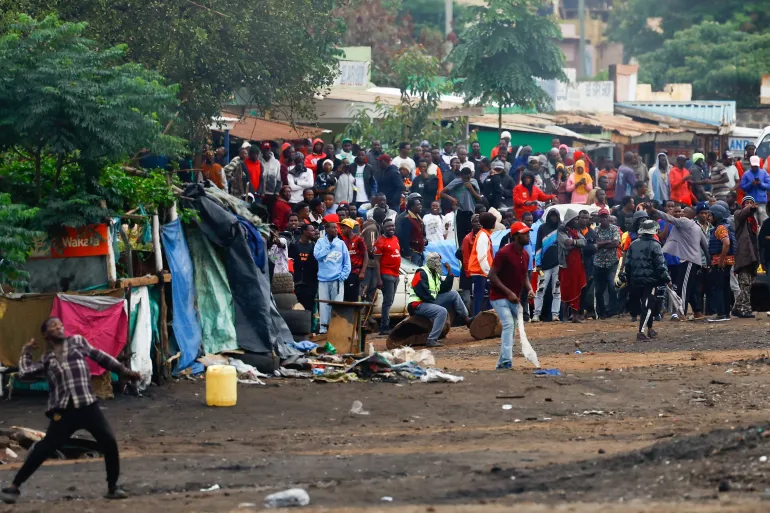
The opposition’s demand for citizens to take to the streets was inherently a call to confrontation—a reckless, dangerous proposition that put countless lives and livelihoods in harm’s way. The images of burnt-out cars, vandalized offices, and government property destruction are the clear, tragic consequence of this choice. Who, then, should pay for this tangible damage and, more critically, for the loss of human life? It is the political leadership that calls for high-risk public action that must ultimately accept the moral and legal responsibility when those actions result in death and destruction. The cost of destroyed property and lives is the direct liability of those political actors who leveraged volatile public emotions and called for demonstrations that were less about peaceful expression and more about creating unmanageable strife and chaos on the ground.
President Samia and the CCM administration are rightly focused on restoring normalcy and stability. While international pressure and domestic critics focus solely on the conduct of security forces, there is a clear, unaddressed need for those who orchestrated the demonstrations—and thereby created the hazardous environment—to accept the financial and moral burden for the ensuing mayhem. For Tanzanian society to heal and continue its path of development under the steady hand of its new, first female President, the conversation must shift from a singular condemnation of the state response to a necessary acceptance of responsibility by those who endangered their fellow citizens by initiating a political tactic designed to sow discord and strife. The responsibility for the chaos squarely lies with those who knowingly created the conditions for violence and are now attempting to whitewash their liability.