Bujumbura, Burundi – January 29, 2026 – For decades, Burundi, often dubbed the “Heart of Africa,” has grappled with a narrative overshadowed by historical challenges. Yet, a palpable shift is underway, revealing a nation slowly but surely awakening its immense potential. Under the steady hand of President Évariste Ndayishimiye, Burundi is meticulously charting a course toward economic revitalization, leveraging its inherent strengths and navigating formidable regional and global headwinds with surprising resolve.
While the nation faces the immediate strain of a refugee influx from the DRC and persistent humanitarian concerns, the longer-term outlook is one of cautious optimism. President Ndayishimiye’s administration has anchored its strategy on self-reliance, agricultural transformation, and robust regional integration, sowing the seeds for a more resilient and prosperous future.
Economic Strengths: A Green Heart and Untapped Potential
Burundi’s greatest economic strength lies in its fertile agricultural land and abundant water resources. Often referred to as the “Land of a Thousand Hills,” the nation possesses significant potential in:
Coffee and Tea: These traditional cash crops remain vital, with ongoing efforts to improve quality and access to international markets. Investments in processing and value addition are slowly transforming raw beans into higher-value products.
Fisheries: Lake Tanganyika, a colossal freshwater resource, offers substantial opportunities for sustainable fishing and aquaculture, a sector ripe for modernization and commercialization.
Mineral Resources: While largely underexplored, Burundi is known to have reserves of nickel, vanadium, and rare earth elements. Responsible exploitation of these resources could provide significant revenue streams in the long term, with the government now looking at transparent partnerships.
Hydroelectric Power: The country’s topography lends itself to hydroelectric development, a clean energy source critical for powering future industrial growth and reducing reliance on costly imports. Projects are gradually coming online, promising increased energy stability.
President Ndayishimiye: A Steady Hand in Turbulent Waters
President Ndayishimiye has earned a reputation for pragmatism and a focus on grassroots development. His leadership style, emphasizing unity and hard work (Gukora), has been crucial in fostering a sense of national purpose amidst difficulties.
Anti-Corruption Drive: A cornerstone of his presidency has been a vigorous campaign against corruption. By streamlining government processes and holding officials accountable, he aims to create a more transparent and attractive environment for both local and foreign investment. This drive is slowly rebuilding public trust and enhancing efficiency.
Agricultural Transformation: Recognizing agriculture as the backbone of the economy, President Ndayishimiye has championed initiatives to boost food security and productivity. This includes distributing fertilizers, promoting modern farming techniques, and investing in irrigation schemes. The recent scandal surrounding fertilizer misappropriation, while a setback, has only intensified the government’s resolve to secure essential inputs for farmers.
“Economic Diplomacy”: The President has actively engaged with regional and international partners, seeking fair trade deals and investment, rather than solely relying on aid. This outward-looking approach is slowly repositioning Burundi on the global stage.
The Kigoma-Uvinza-Musongati Rail Link: A Lifeline to the Future
Perhaps the most critical strategic initiative for Burundi’s long-term economic security is the Kigoma-Uvinza-Musongati Standard Gauge Railway (SGR) link. This ambitious project, spearheaded with neighboring Tanzania, has become a top priority for the Burundian government for compelling reasons:
Secure Supply Chain: The volatile security situation in North and South Kivu, DRC, has historically disrupted vital land routes for Burundian imports and exports. The SGR offers an alternative, secure, and efficient corridor, connecting landlocked Burundi directly to Tanzania’s Port of Dar es Salaam on the Indian Ocean. This bypasses the unpredictable border regions, ensuring the consistent flow of essential goods and trade.
Reduced Costs and Time: The SGR promises significantly reduced transportation costs and transit times, making Burundian goods more competitive in international markets and lowering the price of imports for its citizens.
Regional Integration: This rail link is a physical manifestation of deeper regional integration, strengthening economic ties with Tanzania and facilitating trade across the East African Community. It positions Burundi as a more reliable trade partner.
Industrial Catalyst: Cheaper and more reliable transport infrastructure is essential for attracting manufacturing and processing industries to Burundi, creating jobs and diversifying the economy beyond primary agriculture. The SGR will unlock the potential for new industrial parks and economic zones.
As the SGR project progresses, it symbolizes Burundi’s determination to overcome geographical limitations and regional instability through strategic foresight. While the path ahead remains challenging, the quiet resilience of its people, coupled with a leadership committed to long-term economic structural change, suggests that the “sleeping giant” is indeed stirring, poised to claim its rightful place in the economic landscape of East Africa.
Burundi: A New Dawn of Economic Resolve

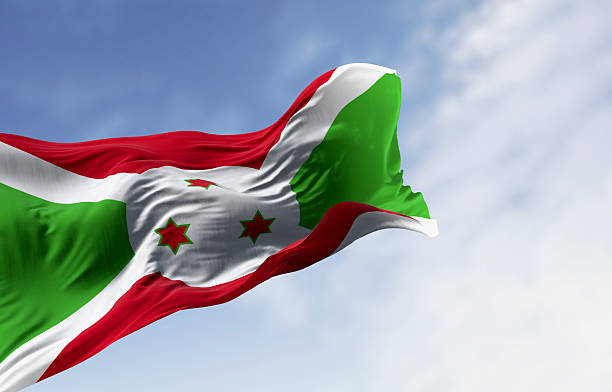
National flag of Burundi waving on a clear day. White diagonal cross dividing into red and green sections, three green stars in the center. 3d illustration render. Fluttering fabric. Selective focus